Partner
United Nations Economic and Social Commission for Asia and the Pacific logo

United Nations Economic and Social Commission for Asia and the Pacific

ESCAPhttps://unescap.org/our-work/environment-and-development/climate-and-clean-air/clean-air

The United Nations Economic and Social Commission for Asia and the Pacific (UN ESCAP) is the regional development arm of the United Nations, established in 1947 to promote economic and social progress in the Asia-Pacific region. Headquartered in Bangkok, Thailand, ESCAP is the largest of the UN's five regional commissions, encompassing 53 member states and nine associate members. Its geographical scope spans from Turkey to Kiribati and from Russia to New Zealand, covering a population of over 4.1 billion people. ESCAP serves as a platform for fostering regional cooperation and addressing shared challenges, with a focus on sustainable development and poverty alleviation.


ESCAP is working to tackle air pollution in the Asia-Pacific region, where rapid urbanization, industrial growth, and reliance on fossil fuels have led to severe air quality issues. The organization addresses air pollution through its broader environmental and sustainable development initiatives. It provides technical assistance, capacity building, and policy recommendations to member states, enabling them to adopt cleaner technologies and implement effective environmental regulations. ESCAP also facilitates regional cooperation by bringing together governments, private sector actors, and civil society to share knowledge and best practices for reducing air pollution.


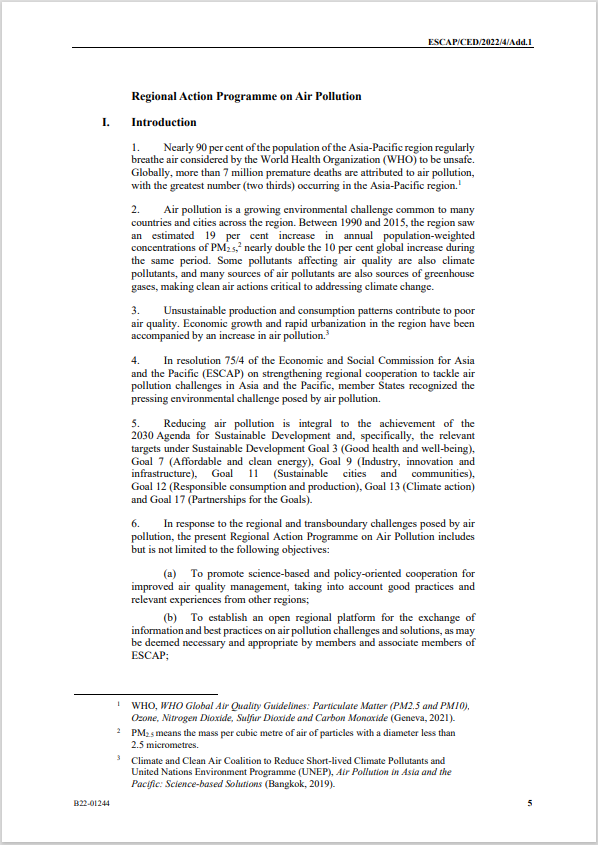
One of ESCAP's key contributions to addressing air pollution is through the Asia-Pacific Regional Action Programme on Air Pollution (RAPAP). Adopted by member States at the 7th session of the ESCAP Committee on Environment and Development, RAPAP focuses on improving air quality management, facilitating air quality monitoring, sharing open data, exchanging best practices, and mobilizing multilateral cooperation. It emphasizes leveraging existing initiatives like the Acid Deposition Monitoring Network in East Asia (EANET) and the North-East Asia Clean Air Partnership (NEACAP) to strengthen regional collaboration. RAPAP also supports the creation of technical expert groups to enhance scientific research and engage stakeholders in addressing transboundary air pollution. ESCAP works closely with platforms such as the Asia-Pacific Clean Air Partnership (APCAP), which was established in 2015 to coordinate clean air programs across the region.  


In addition to these efforts, ESCAP promotes renewable energy adoption and energy efficiency measures as part of its broader agenda to reduce emissions from power generation—one of the leading contributors to air pollution in the region. It also emphasizes data-driven policymaking by providing tools for monitoring pollution levels and integrating air quality management into national development plans.


Projects


Title
Duration
01/01/2021 - 31/12/2024

Partners

Korea International Cooperation Agency (KOICA); Korean National Institute for Environment Research (NIER)
Geographical Scope
Asia-Pacific region

Description

The Pan-Asia Partnership for Geospatial Air Pollution Information (PAPGAPI) is an open partnership launched in 2020 to enhance air quality monitoring by remote sensing data. Supported by ESCAP, the National Institute of Environmental Research (NIER) of Republic of Korea, and the Korea International Cooperation Agency (KOICA), PAPGAPI integrates satellite and ground-based data to improve air pollution assessment and policymaking. PAPGAPI’s work covers multiple key areas. It utilizes the Geostationary Environment Monitoring Spectrometer (GEMS) to provide hourly satellite-based data on pollutants such as aerosols, ozone, nitrogen dioxide, sulfur dioxide, and formaldehyde across Asia. Additionally, it has established the Pandora Asia Network (PAN), an advanced system of ground-based spectrometers deployed in 13 countries to validate satellite data with localized atmospheric measurements. This combination strengthens air quality assessments and informs emission control policies. PAPGAPI supports capacity building and technology transfer to help national agencies interpret geospatial data and better manage air pollution monitoring and also fosters regional cooperation through expert meetings and knowledge sharing.

Contact
escap-edd [at] un [dot] org
  
Title
Building a Partnership and Coordination Platform for the Regional Action Programme on Air Pollution (RAPAP)

Duration

01/01/2024 - 31/12/2026
Partners
Clean Air Fund, Energy Foundation, UNEP

Geographical Scope

Asia-Pacific region
 

Description

RAPAP, as the first of its kind in Asia and the Pacific, has been recognized as a framework, guiding document or reference for national, subregional, multilateral and multistakeholder mechanisms to advance their cooperation agenda for clean air in the region. This project is aimed to enable this potential role and contribution of RAPAP by providing a common online platform for monitoring and mobilizing commitments and actions of governments and stakeholder groups. The RAPAP Platform will also serve as the regional repository for reviewing RAPAP implementation. 
Contact
escap-edd [at] un [dot] org
  
Title
Clean Air for Sustainable ASEAN (CASA)
Duration
01/01/2022 - 31/12/2026

Partners

ASEAN-KOREA Cooperation Fund (AKCF), Seoul National University

Geographical Scope

Asia-Pacific region

Description

The four-year project aims to provide comprehensive support for ASEAN Member States (AMS) to mitigate air pollution and its negative impact on health through political, scientific and technical measures. The project is composed of four primary outcomes. Outcomes 1 is to raise understanding of the source and health impact of air pollution. Each ASEAN member state will identify the major sources of air pollutants in their selected major cities by understanding the composition of particulate and gaseous air pollutants. The health impact assessment will enable each ASEAN member state to understand the health benefit of improving air quality. In particular, the result of the health impact assessment will be a scientific basis for air pollution policy development by comparing the health benefits and economic impacts of air pollution policy. Outcome 2 is to improve access to information on the status of air pollution. The situation analysis to recommend locations of air pollution monitoring stations in ASEAN member states will be conducted using satellute (GEMS -operated by the Republic of Korea's Ministry of Environment) and ground data.

Based on the situation analysis, air quality monitoring stations will be installed and managed, especially for countries with a limited number of monitoring stations. The project team will train local authorities to maintain the stations. A regional platform will be developed to incorporate air quality monitoring stations and satellite data. Outcome 3 will raise the preparedness and capacity of ASEAN member states to address air pollution. The project will develop regional guidance and resources for the ASEAN member states' response to air pollution and its health impacts. Outcome 4 will develop regional policy to mitigate air pollution. The project will also develop policy recommendations for clean air in ASEAN under the coordination of participating agencies.

Contact
escap-idd [at] un [dot] org
Clear
Learning Material
Air Pollution: Gender and Health
Publication
Strategies for Technical Cooperation for Clean Air in Asia- Pacific
2026
Publication
Pathways to Improving Air Quality in the Asia-Pacific Region through Technology Cooperation
2026
Publication
Using Geostationary Earth Observation Satellite for Air Pollution Monitoring in Southeast Asia: Practice and Policy Recommendations
2026
Publication
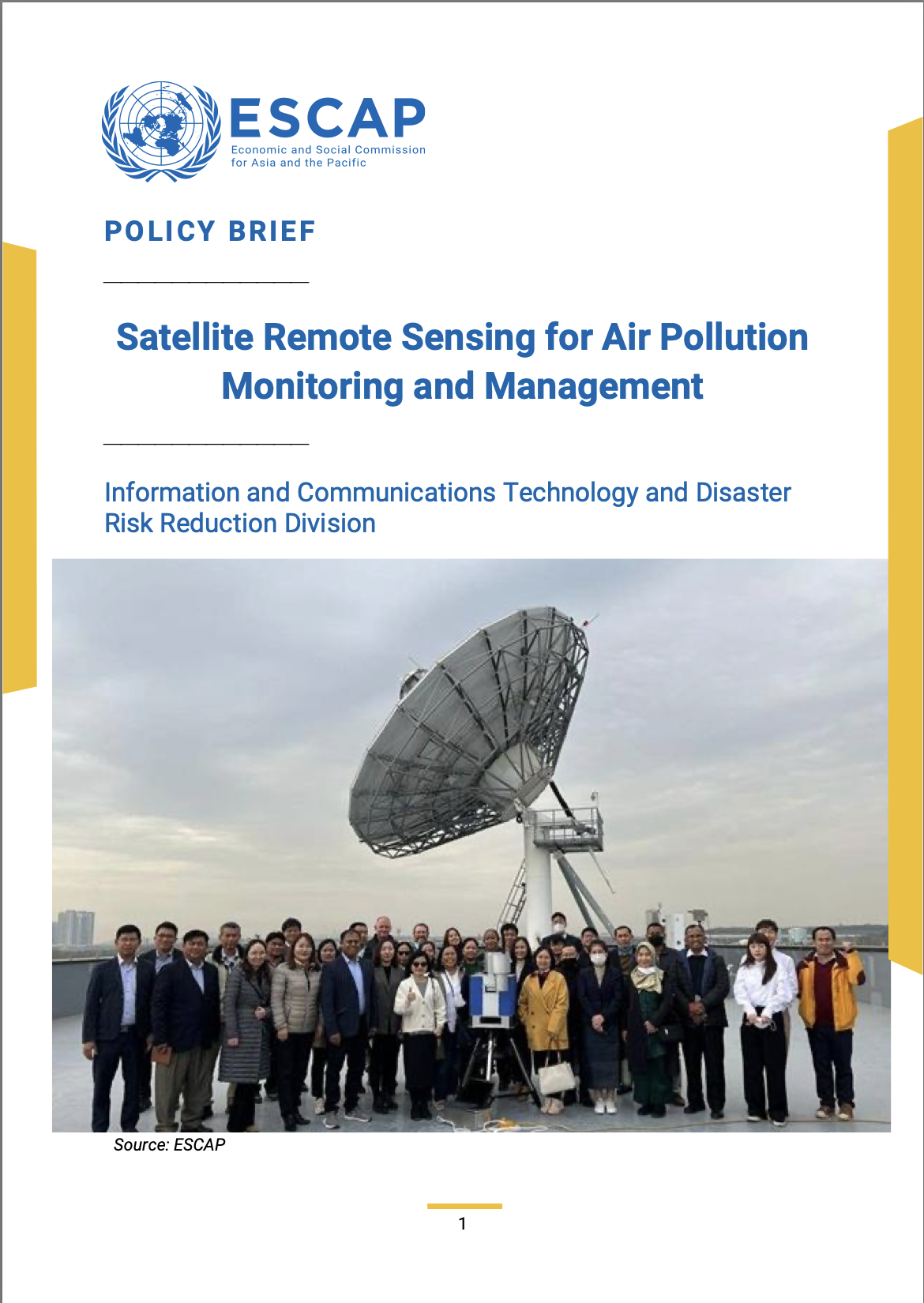
Satellite Remote Sensing for Monitoring Air Pollution in Asia and the Pacific: Opportunities and Policy Considerations
2026
Publication
Successes and Challenges in Addressing Air Pollution in North-East Asia
2025
Publication
Air quality status and trends in the Asia-Pacific region
2025
Learning Material
Handbook on Innovative Air Quality Monitoring Technologies
2025
Publication
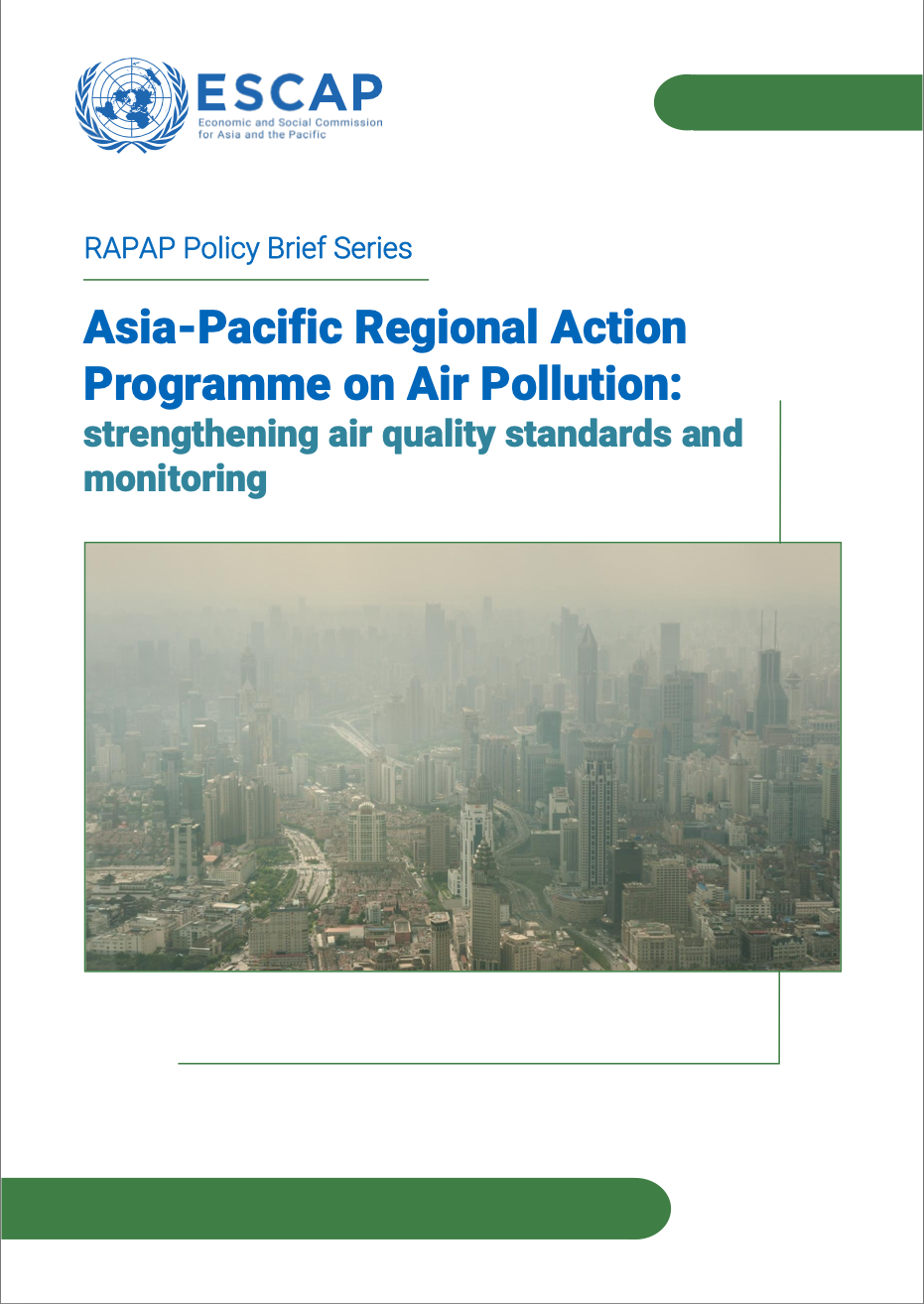
Asia-Pacific Regional Action Programme on Air Pollution: strengthening air quality standards and monitoring

2025
Learning Material
Clean Air For All
Clean Air For All
2025
Learning Material
GEMS L2 Basic concepts of satellite observing air quality
2024
Learning Material
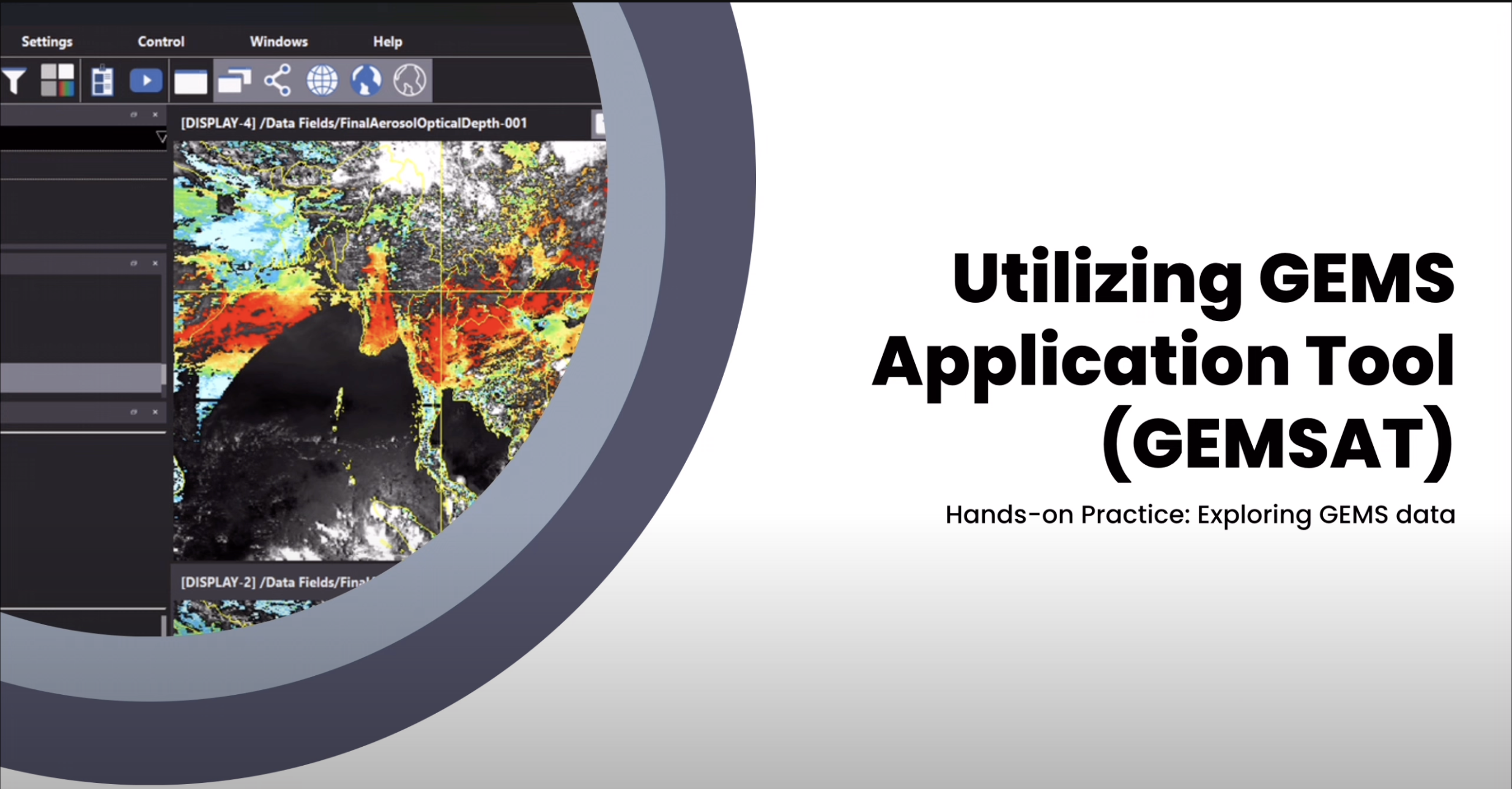
GEMS L8 Utilizing GEMS Application Tool (GEMSAT) (Part 1)
2024
Learning Material
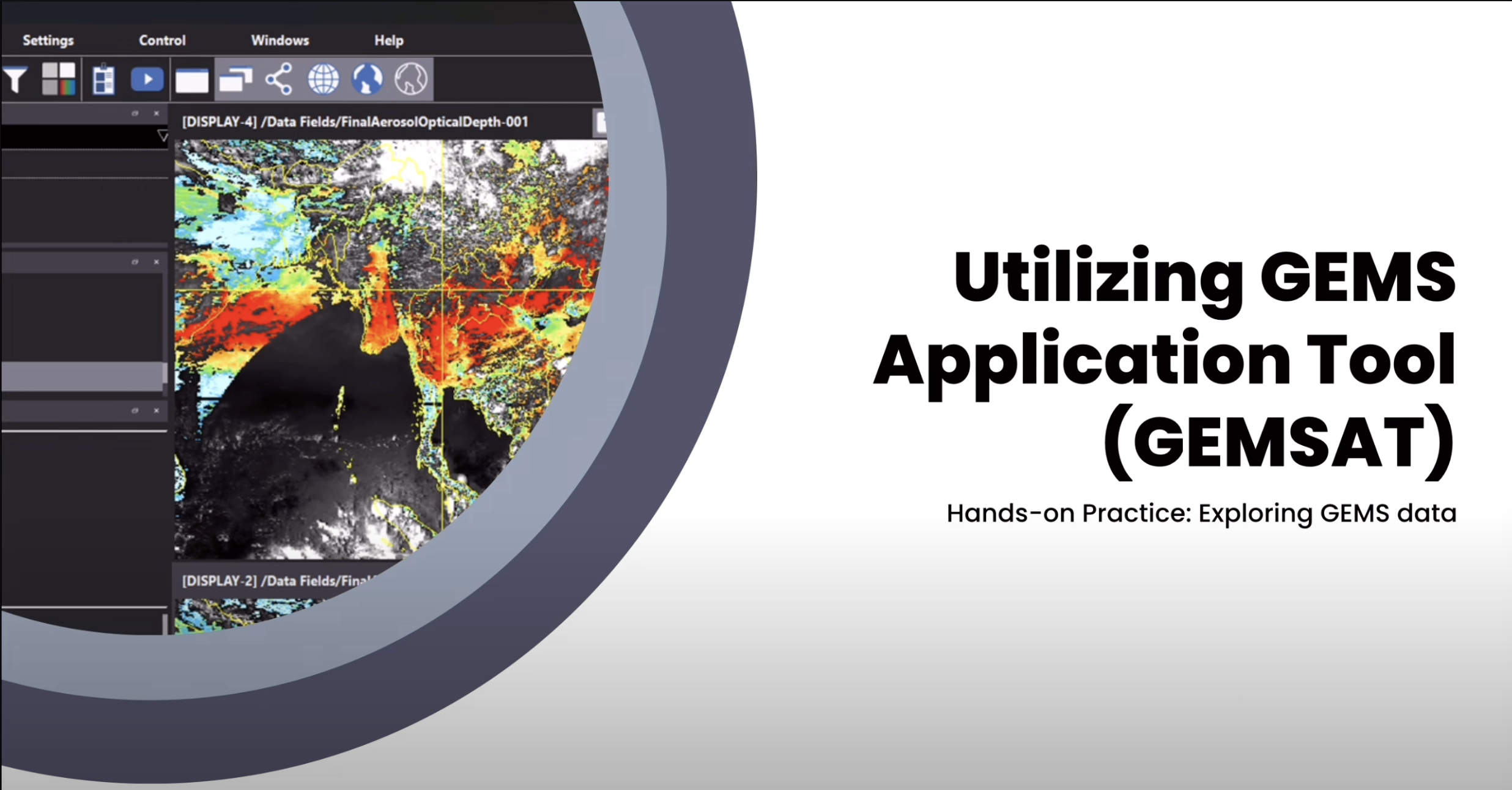
GEMS L9 Part2 Utilizing GEMS Application Tool (GEMSAT) (Part 2)
2024
Learning Material
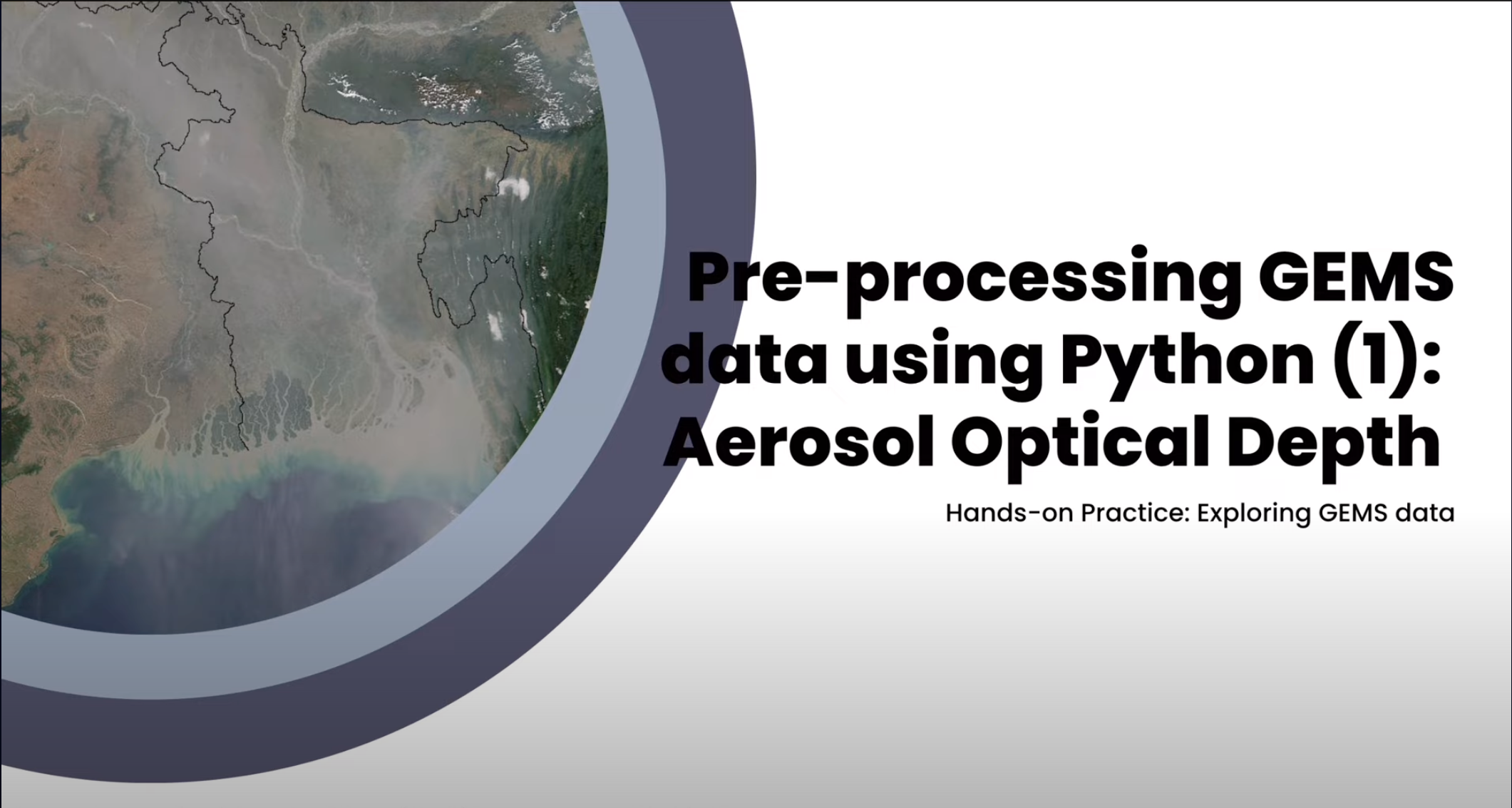
GEMS L5 Pre-processing GEMS data using Python (1): Aerosol Optical Depth (Part 1)
2024
Learning Material
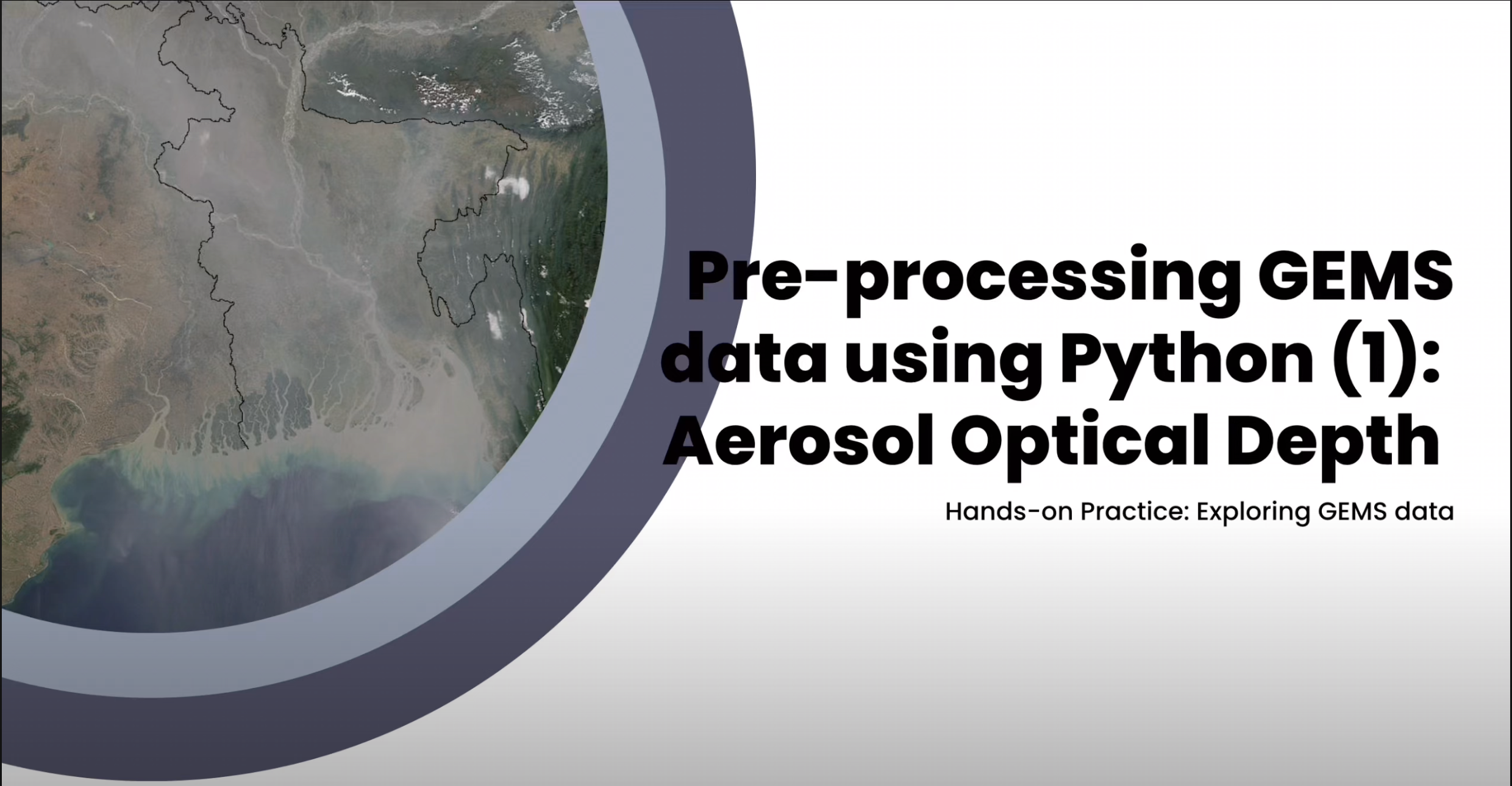
GEMS L6 Pre-processing GEMS data using Python (1): Aerosol Optical Depth (Part 2)
2024
Learning Material
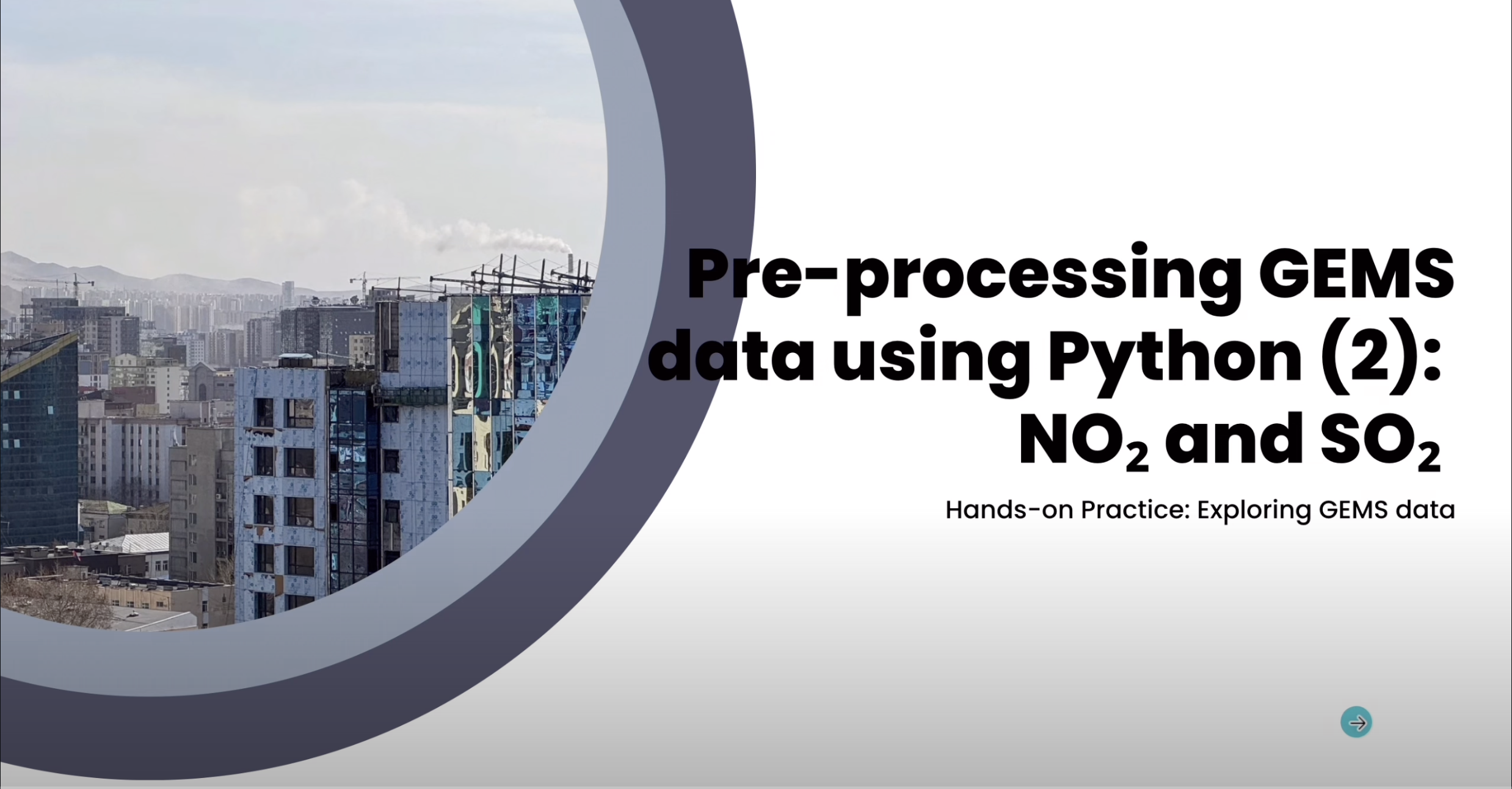
GEMS L7 Pre-processing GEMS data using Python (2): Nitrogen dioxide
2024
Learning Material
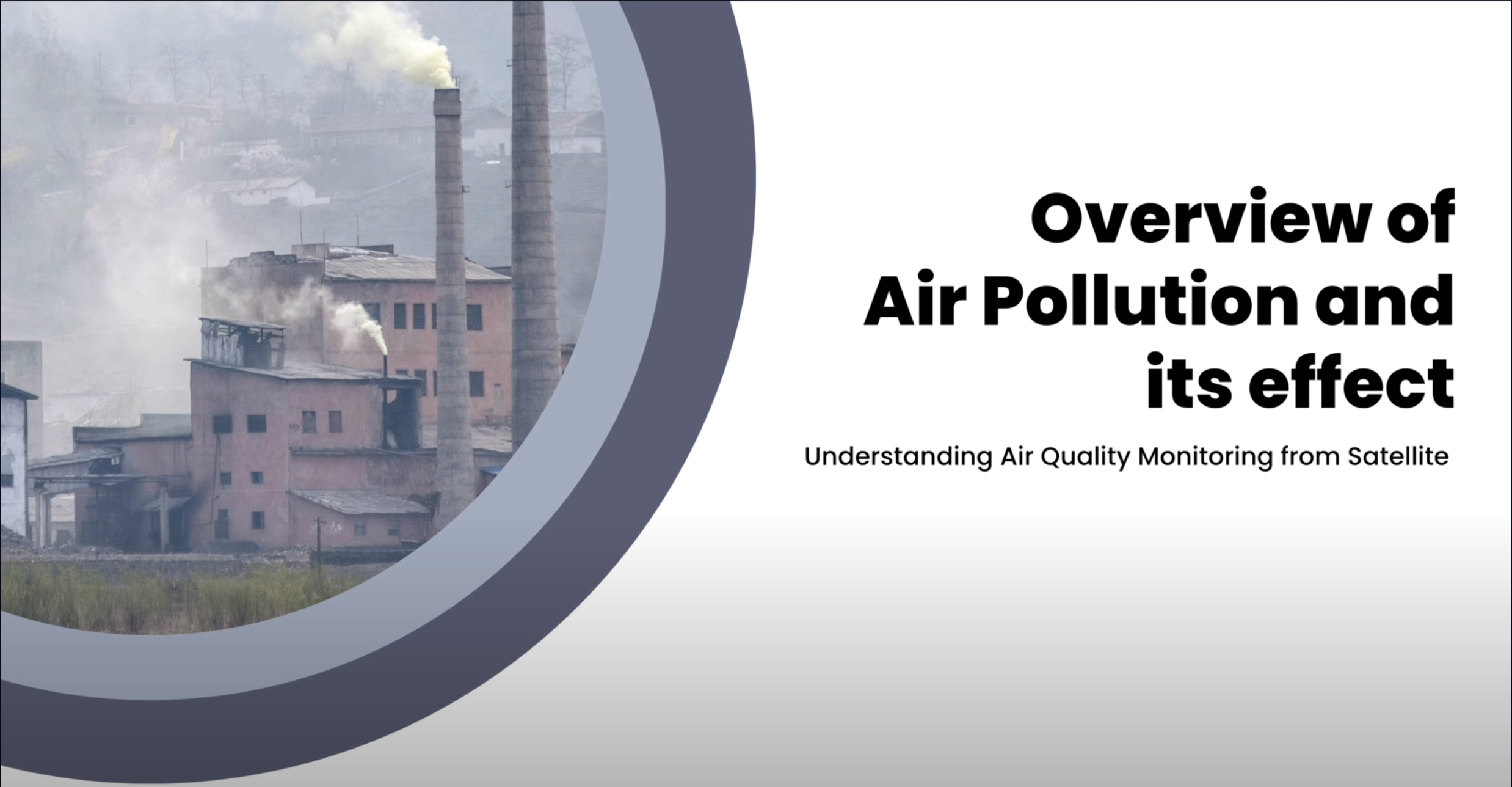
GEMS L1 Overview of Air Pollution and its effect
2024
Learning Material
GEMS L3 Satellite retrieval for monitoring air quality
2024
Learning Material
GEMS L4 Introduction to GEMS and download GEMS data
2024
Publication
Assessment of Air Quality Remote Sensing in Thailand
2024
Publication
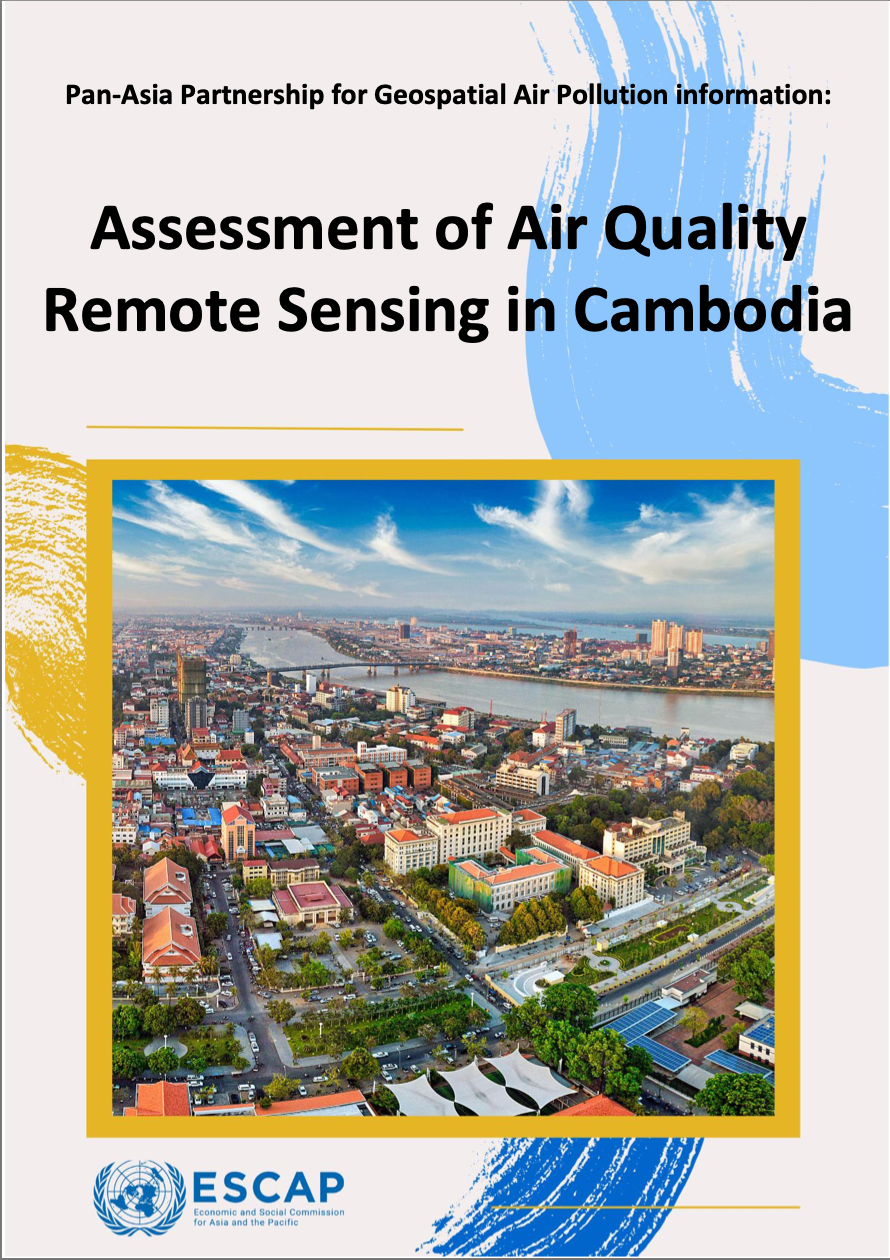
Assessment of Air Quality Remote Sensing in Cambodia
2024
Publication
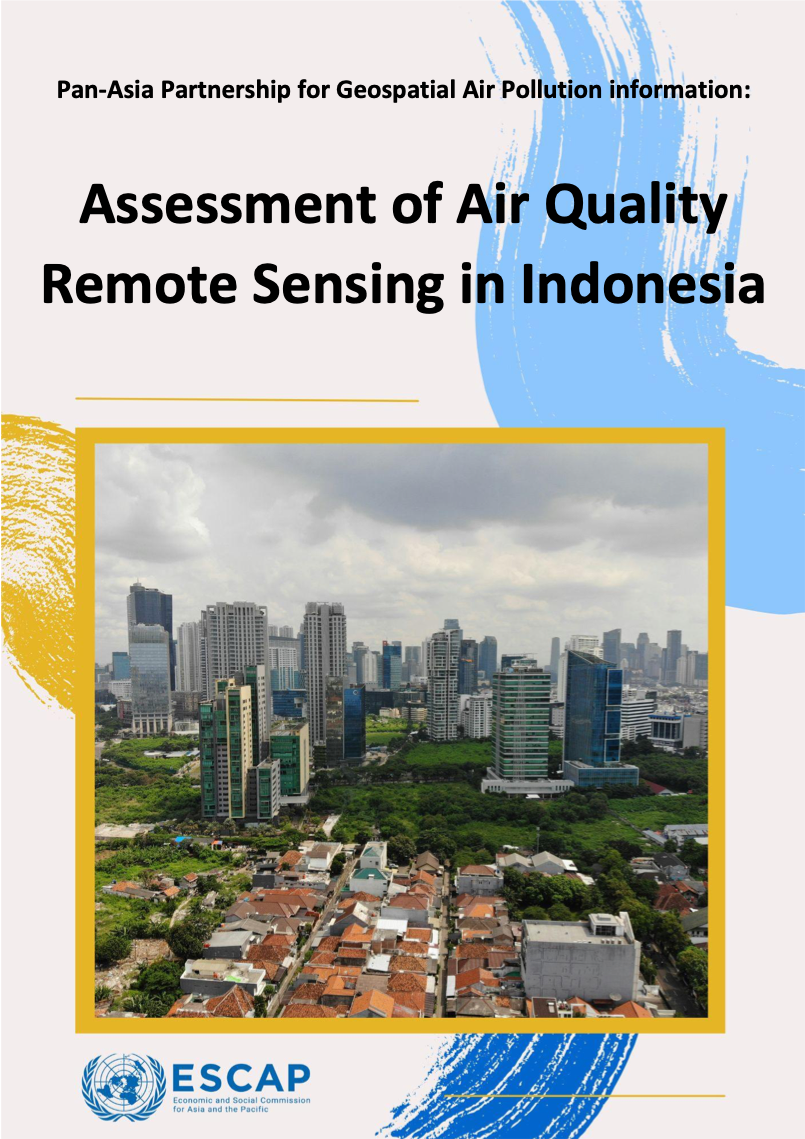
Assessment of Air Quality Remote Sensing in Indonesia
2024
Publication
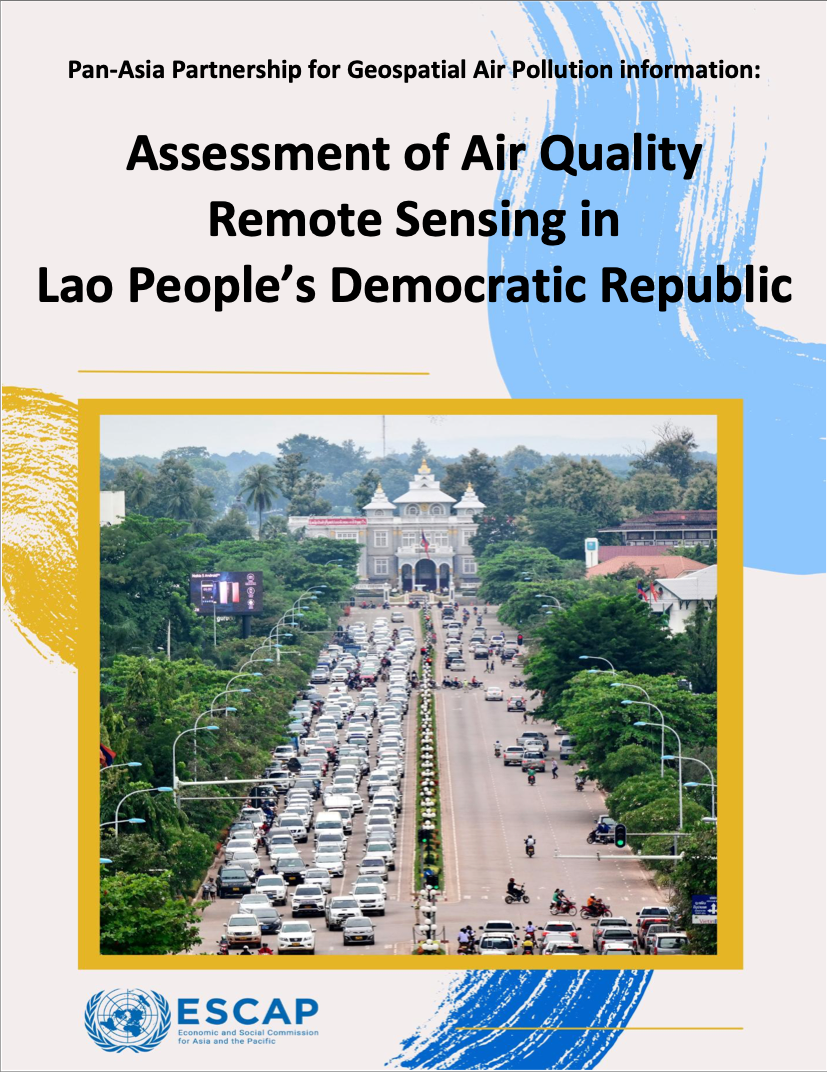
Assessment of Air Quality Remote Sensing in Lao People’s Democratic Republic
2024
Publication
Assessment of Air Quality Remote Sensing in Mongolia
2024
Publication
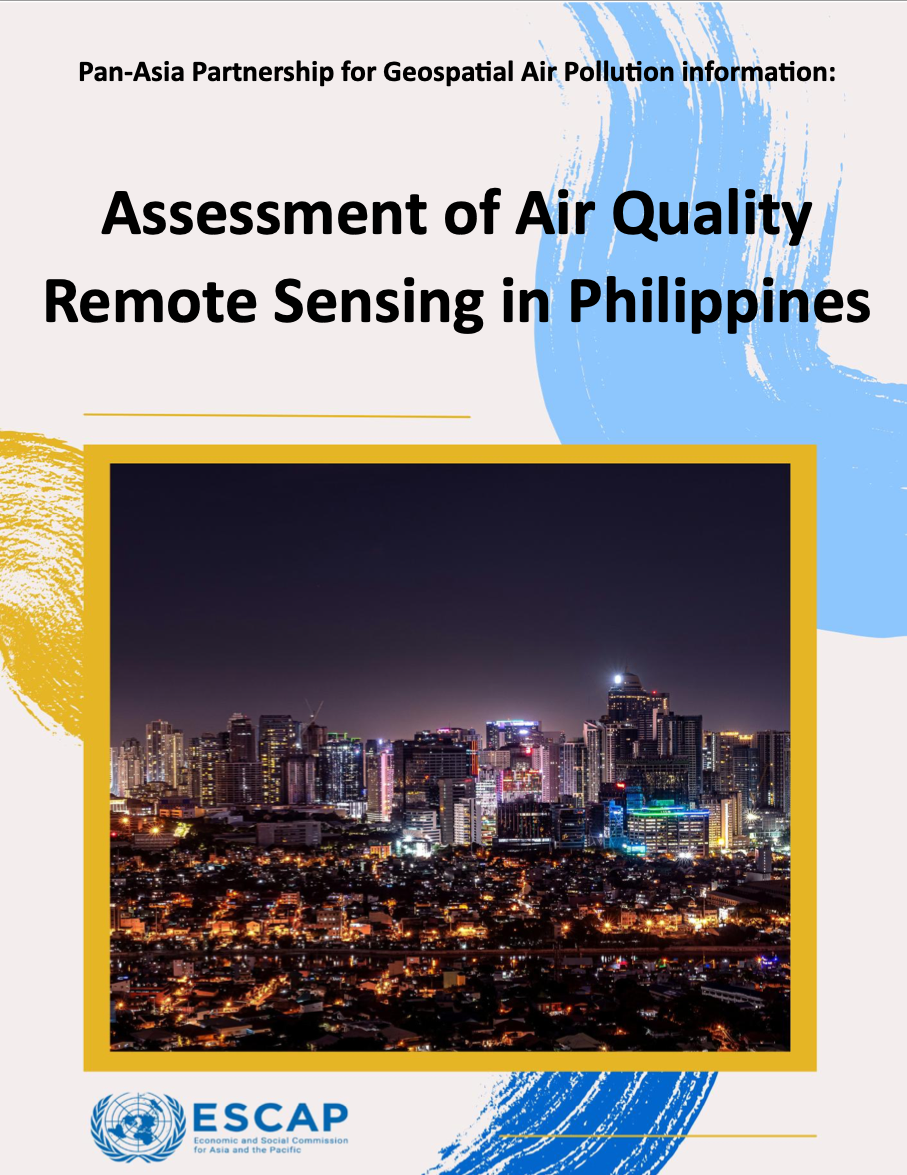
Assessment of Air Quality Remote Sensing in Philippines
2024
Publication
Assessment of Air Quality Remote Sensing in Viet Nam
2024
Publication
City Action Plans and Technology Adoption Strategies in Gurugram, India
2023
Publication
Technological Interventions and Gaps in Air Pollution Control in Dhaka, Bangladesh
2023
Publication
Comparative Analysis of Air Pollution Control Technologies and Policies in Three Asian Cities - Bangkok, Dhaka and Gurugram
2023
Publication
Current Status and Application Plans of GEMS
2023
Publication
Jambi Air Pollution Action Plan
2023
Publication
Technological Interventions and Gaps in Air Pollution Control in Bangkok, Thailand
2023
Publication
City Action Plans and Technology Adoption Strategies in Dhaka, Bangladesh
2023
Publication
City Action Plans and Technology Adoption Strategies in Bangkok, Thailand
2023
Publication
Technological Interventions and Gaps in Air Pollution Control in Gurugram, India
2023
Publication
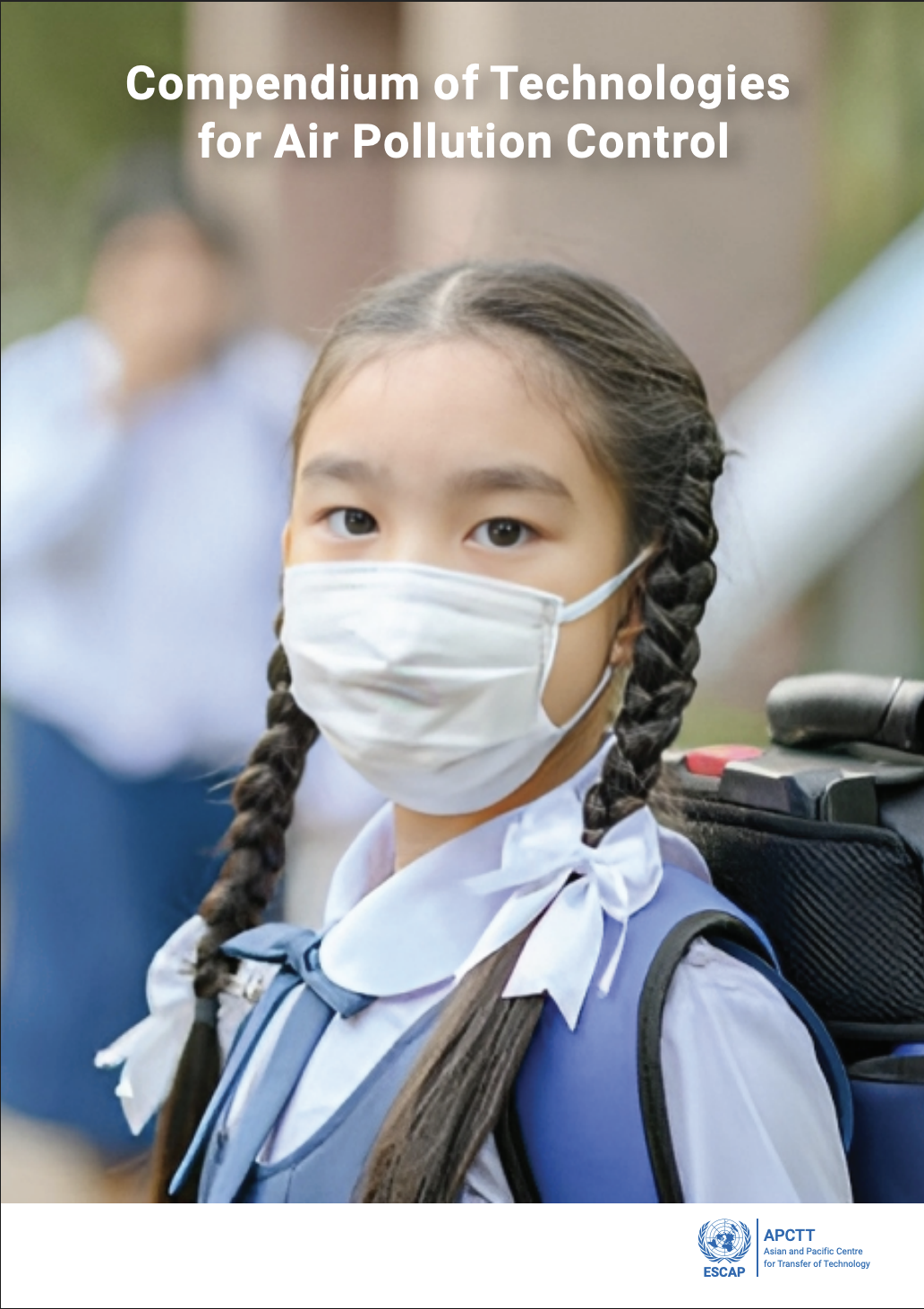
Compendium of Technologies for Air Pollution Control
2023
Publication
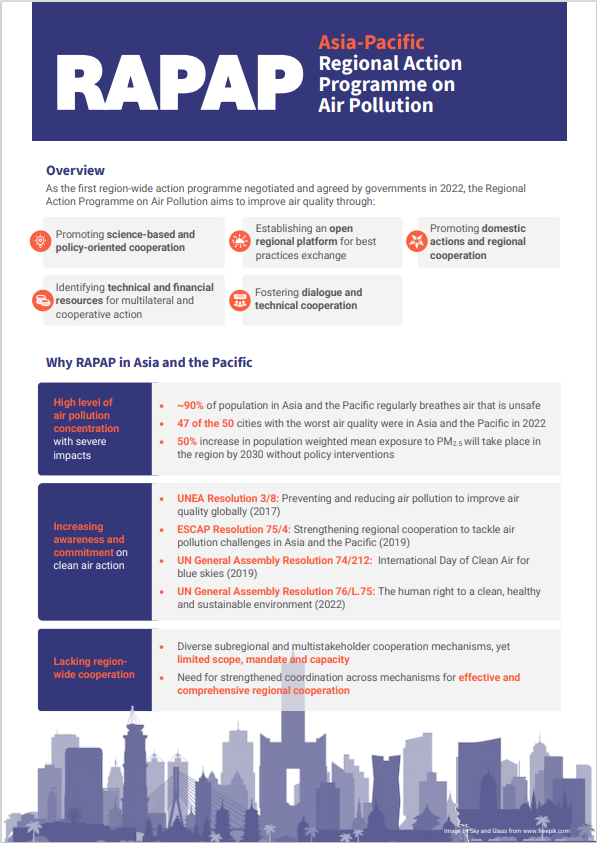
Regional Action Programme on Air Pollution Infographic
2023
Publication
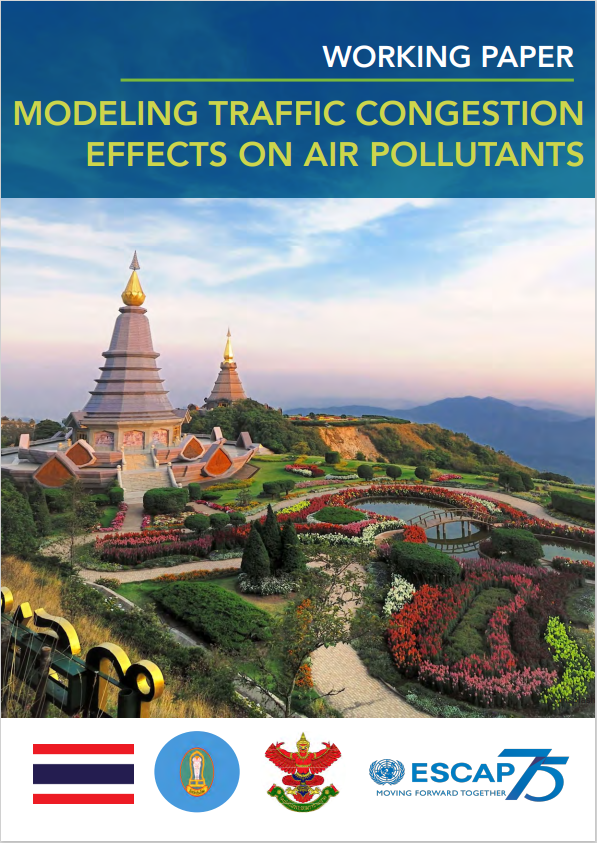
Modeling traffic congestion effects on air pollutants
2023
Publication
Air quality in Asia : air pollution trends and mitigation policy options
2023
Publication
Methodology to develop city-level, science-based, air-pollution action plans
2023
Publication
Gender, health and air pollution
2023
Publication
Fuvahmulah Air Pollution Action Plan
2023
Publication
High-Level Forum on Clean Air
2023
Publication
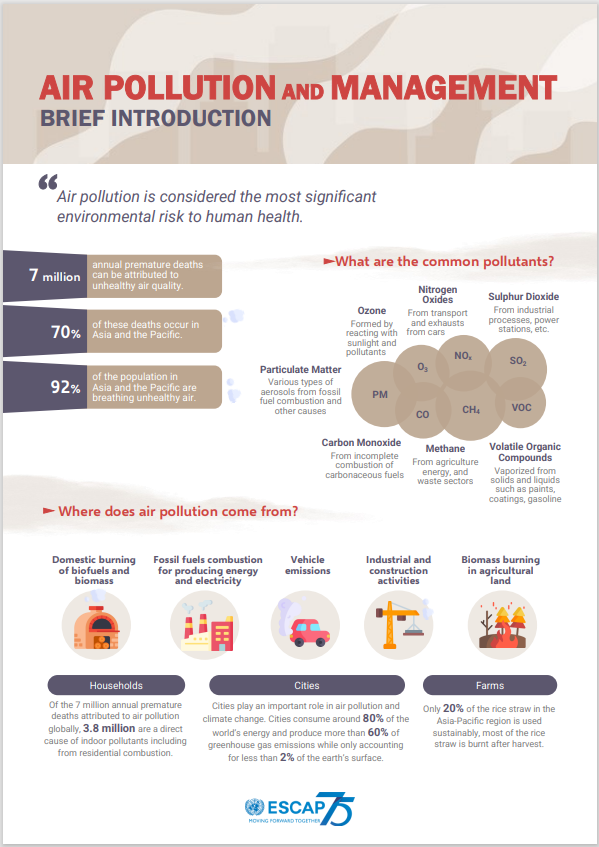
Air pollution and management brief introduction Infographics
2022
Publication
Evaluation of the project on Strengthening Regional Cooperation to Tackle Air Pollution Challenges in Asia and the Pacific
2022
Publication
Chiang Mai Air Pollution Action Plan
2022
Publication
2023 Review of Climate Ambition in Asia and the Pacifc: Just Transition Towards Regional Net-Zero Climate Resilient Development
2022
Publication
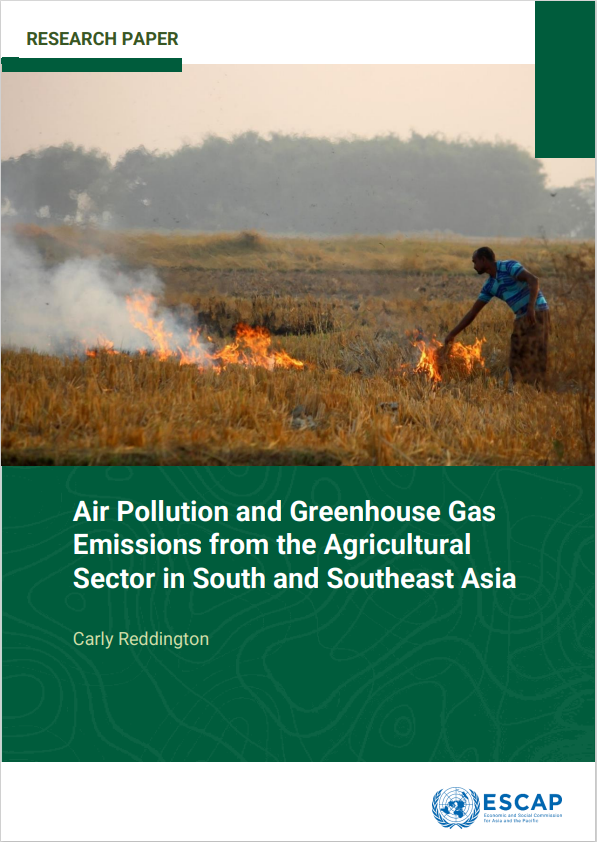
Air Pollution and Greenhouse Gas Emissions from the Agricultural Sector in South and Southeast Asia
2022
Publication
Localizing the Sustainable Development Goals to Address Interlinked Crises in the Post-Pandemic era
2022
Publication
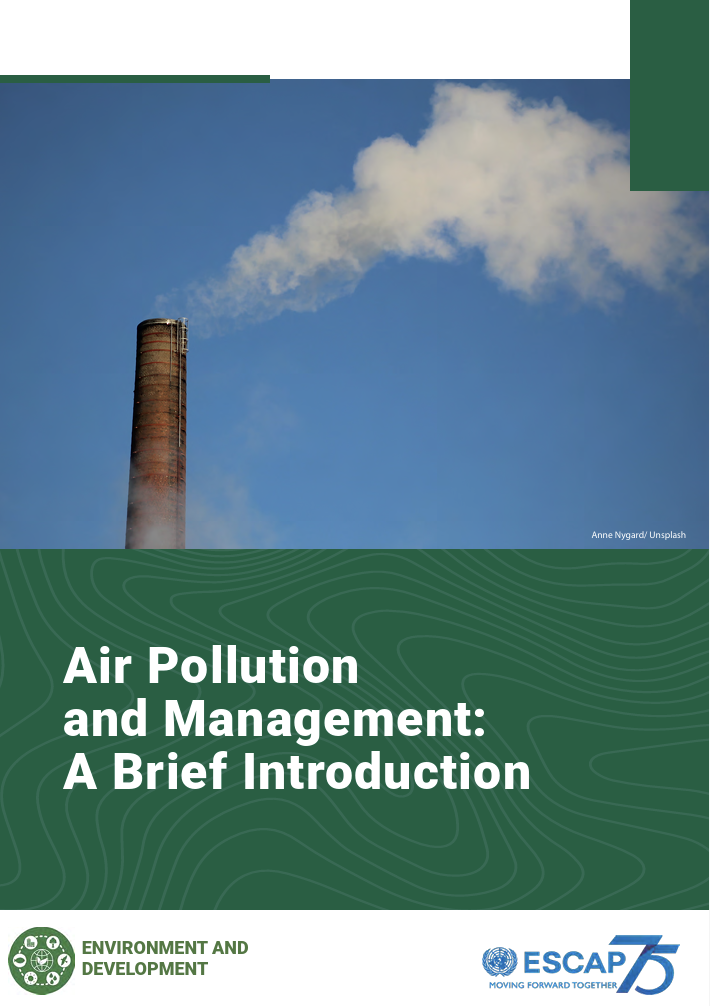
Air pollution and management : a brief introduction
2022
Publication
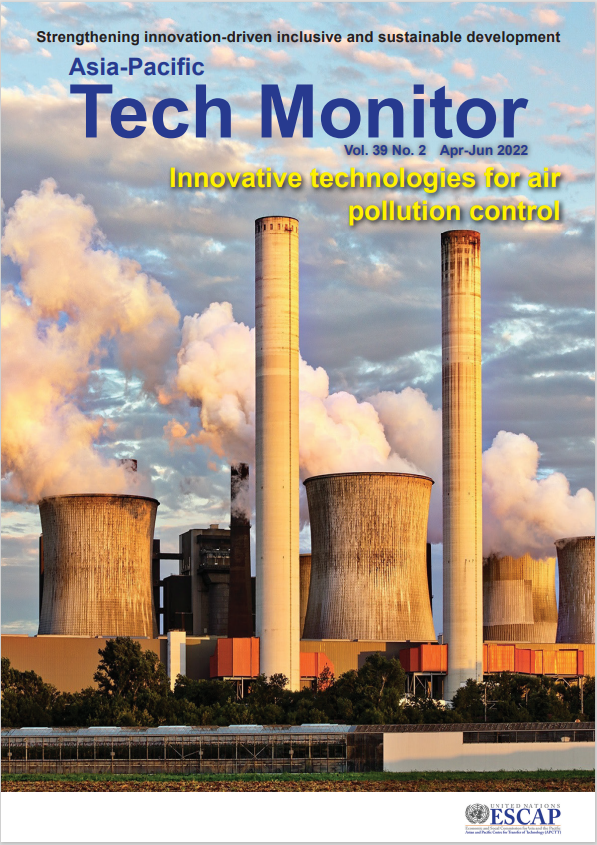
Strengthening Innovation-Driven Inclusive and Sustainable Development, Asia-Pacific Tech Monitor, Innovative Technologies for Air Pollution Control
2022
Publication
Preparations for the 7th Committee on Environment and Development at the Ministerial Level
2022
Publication
Ministerial Declaration on Protecting Our Planet through Regional Cooperation and Solidarity in Asia and the Pacific
2021
Publication
Air Pollution Monitoring in Asia-Pacific: Innovative Solutions with Remote Sensing
2021
Publication
Regional Cooperation for Air Pollution in Asia and the Pacific: Subregional Dialogue Series South and West Asia
2021
Publication
Prepratory Report on Strengthening Regional Cooperation on Air Pollution in Asia and the Pacific
2021
Publication
Asia-Pacific Futures in 2040: Raising Ambitions for a Healthy Environment
2021
Learning Material
GEMS Data Training
GEMS Data Training
2021
Publication
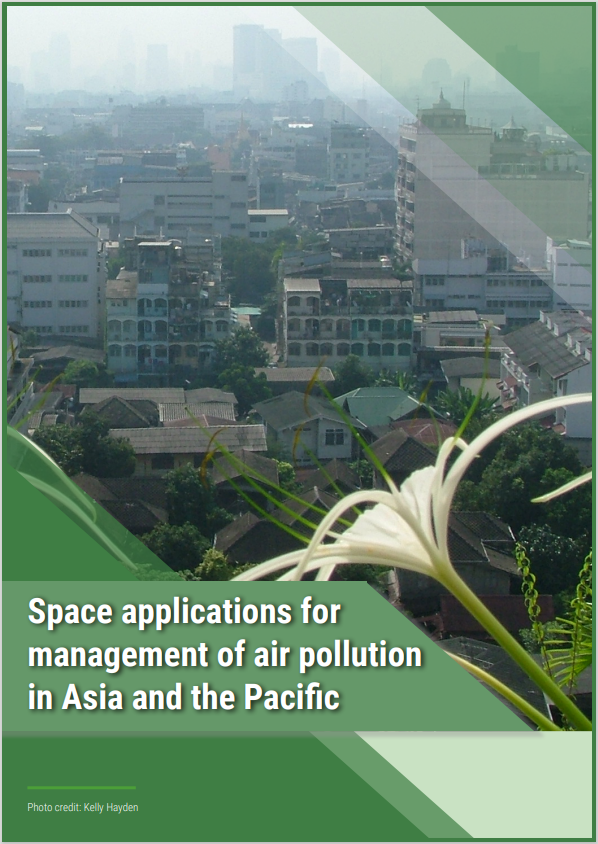
Space Applications for Management of Air Pollution in Asia and the Pacific
2020
Learning Material
Cities for a Sustainable Future, EDD Leadership Training
2020
Publication
Regional Conversation on Air Pollution in Asia-Pacific On the commemoration of the 1st International Day of Clean Air for blue skies
2019
Publication
The Impact of Odd-Even Transportation Policy and Other Factors on Pollution in Delhi: a Spatial and RDD Analysis
2019
Publication
Review of the Main Activities on Transboundary Air Pollution in Northeast Asia
2012
Publication
Mitigation of Trans-Boundary air Pollution from Coal-Fired Power Plants in Northeast Asia
2012
Clear
Event
The 6th International Day of Clean Air for Blue Skies

Offline

Sep 05, 2025
Event
Consulting Workshop for Technical Assistance strategy within the RAPAP Framework

Offline

May 02, 2025
Event
Joint Meeting of the Working Groups on Air Quality Standards and Data

Online

Mar 28, 2025